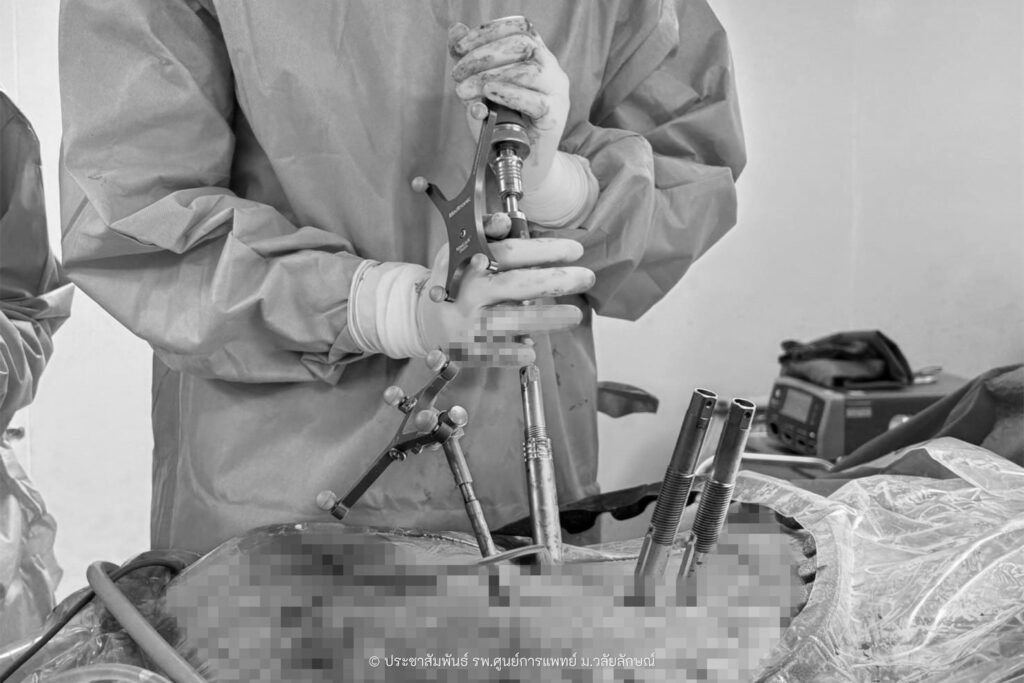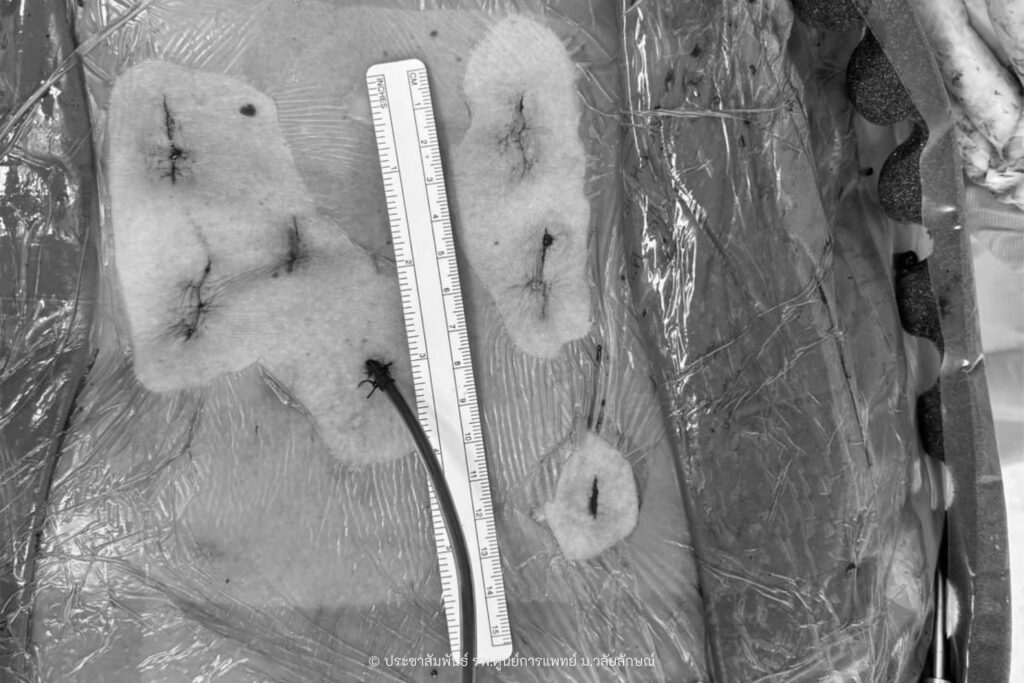
The Department of Orthopedics at Walailak University Hospital has successfully treated four patients with lumbar spondylolisthesis, a condition where a vertebra slips forward, and spinal stenosis, a narrowing of the spinal canal that can put pressure on nerves. Advanced endoscopic techniques and computer-guided navigation were used to achieve these results.
A minimally invasive approach was employed by the surgical team, using the uniportal endoscope to widen the nerve root canal, and a spacer or cage was inserted between vertebrae to replace a damaged spinal disc. This procedure, known as Transforaminal Lumbar Interbody Fusion (TLIF), was combined with spinal fusion to stabilize the spine.
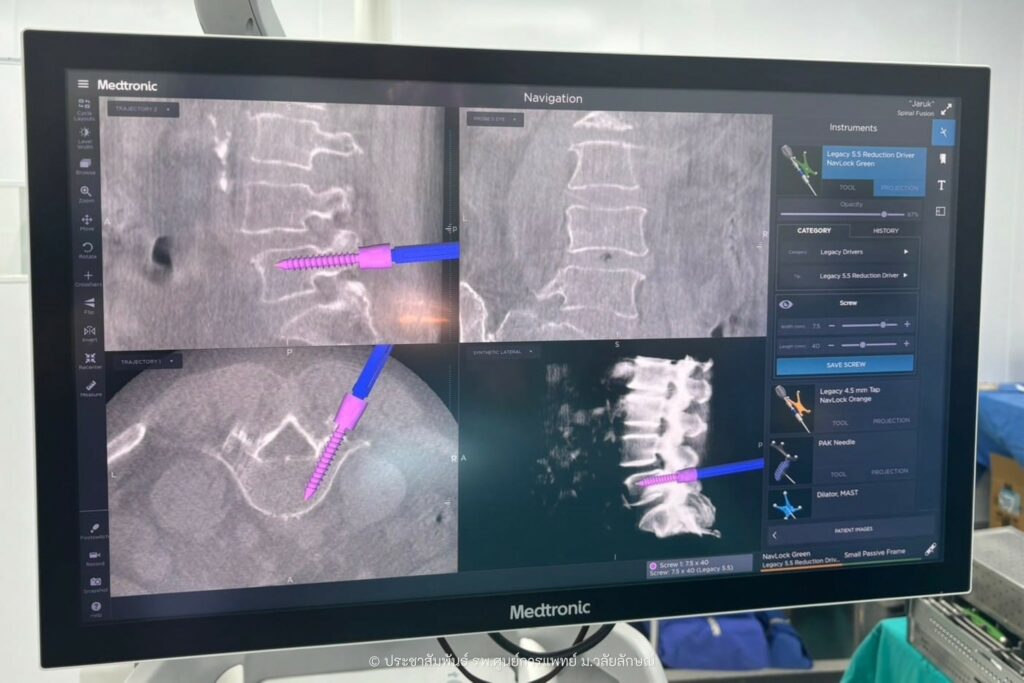
Precise placement of instruments was ensured by the 3D computer-guided navigation system. This minimized damage to surrounding tissues and reduced recovery time. The technique is especially beneficial for patients with unstable vertebrae, often causing severe back pain and leg pain or numbness.
The choice of surgical technique is based on each patient’s individual needs, considering the severity of their condition to achieve optimal outcomes and safety.